

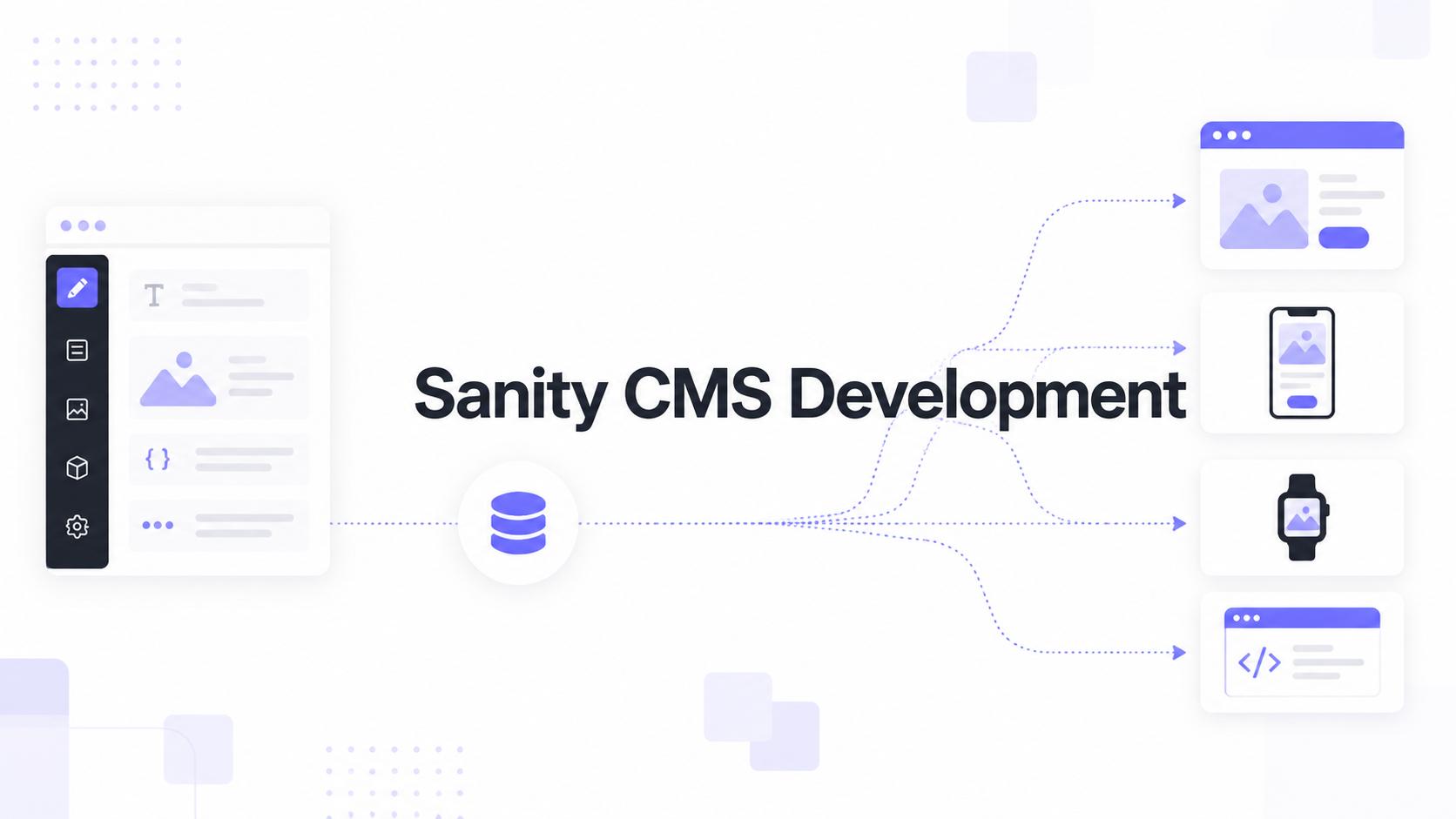
Modern audiences expect fast, relevant, accessible, and consistent digital experiences across websites, mobile apps, online stores, customer portals, and other connected platforms. Sanity CMS development gives businesses the flexibility to manage structured content centrally while delivering it through customized front-end experiences without the limitations of rigid templates. With a well-planned implementation, organizations can streamline publishing workflows, support scalable growth, improve content consistency, and create more engaging experiences for users across every digital touchpoint.
Table of Contents
- What Is Sanity CMS Development?
- How a Sanity Headless CMS Improves Digital Experiences
- Supporting Personalized and Relevant Experiences
- Integrating Sanity With Business Systems
- Strengthening SEO and Discoverability
- Security, Governance, and Reliability
- A Practical Sanity CMS Development Process
- Discovery and Planning
- Content Modelling
- Studio and Front-End Development
- Testing and Launch
- Continuous Improvement
- Frequently Asked Questions
- Is Sanity suitable for a growing business?
- What is the difference between Sanity and a traditional CMS?
- Can Sanity support ecommerce websites?
- Is Sanity difficult for non-technical editors?
- Can Sanity improve website speed?
- Does Sanity support multiple languages?
- How should a business choose Sanity development services?
- Conclusion
What Is Sanity CMS Development?
Sanity enables businesses to plan, design, build, integrate, and maintain a flexible content platform. By Sanity CMS development as part of this process, organizations can store content as structured data rather than locking it into a single website layout, making information easier to reuse across websites, mobile applications, ecommerce platforms, and other digital channels.
This approach gives developers control over the front end while content teams manage information through Sanity Studio, the platform’s customizable editing environment. Content models, workflows, fields, previews, and permissions can be configured to match the organization’s operational requirements.
A successful project usually includes:
- Content architecture and data modelling
- Custom Sanity Studio configuration
- Front-end development
- API and third-party integrations
- Search engine optimization foundations
- Security and access controls
- Performance testing
- Ongoing maintenance and improvements
Marketing websites, publishing platforms, ecommerce stores, product portals, internal tools, and multi-brand digital ecosystems can all benefit from tailored Sanity development services that support flexible content management and scalable digital experiences.
How a Sanity Headless CMS Improves Digital Experiences
1. Consistent Content Across Multiple Channels
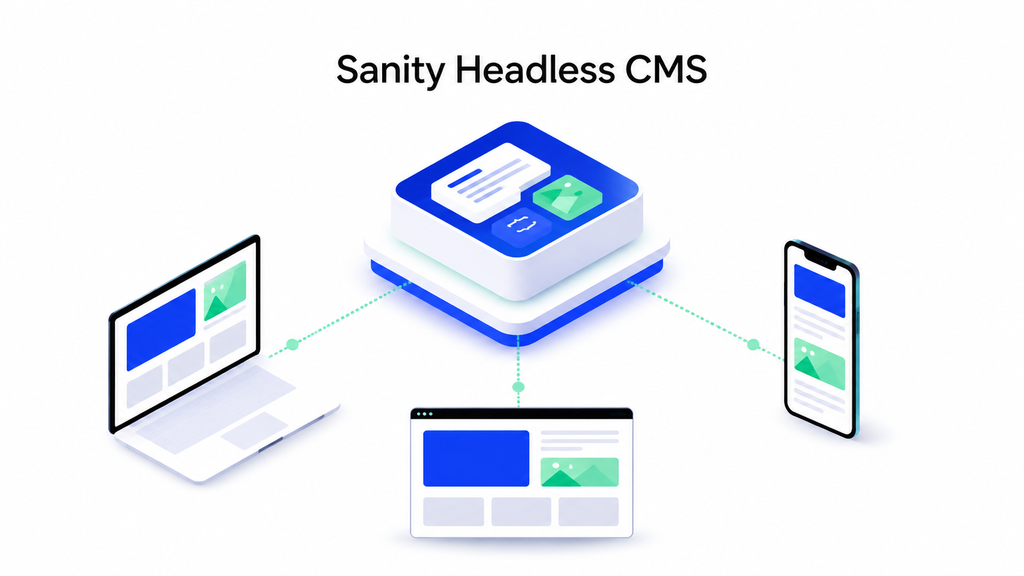
Businesses can create content once and distribute it across multiple digital platforms through a Sanity headless CMS. Product details, service information, articles, images, pricing data, and promotional messages can be delivered consistently through websites, mobile applications, digital kiosks, chat interfaces, and other connected experiences.
This reduces duplicated work and helps maintain consistency. When content needs to be updated, editors can make a central change instead of manually revising every channel.
For customers, this creates a more reliable experience. Information remains aligned whether they browse on a desktop, use a mobile device, or access a business through another digital touchpoint.
2. Greater Front-End Flexibility
Traditional systems often connect content management and presentation too closely. As a result, design and development teams may need to work within predefined templates or plugins.
Sanity separates these layers. Developers can use frameworks such as React, Vue, Angular, Next.js, or other technologies to build fast and distinctive interfaces. Designers also gain more freedom to create layouts, interactions, and navigation systems that suit the audience.
This flexibility is particularly valuable for businesses with complex user journeys, custom product experiences, or highly visual digital platforms.
3. Better Content Workflows for Teams
Content production often involves writers, editors, designers, marketers, legal reviewers, and business managers. Without a clear workflow, teams may overwrite changes, lose track of approvals, or publish incomplete information.
Sanity supports structured collaboration and real-time editing. Organizations can define roles, permissions, review stages, and publishing procedures that make responsibilities clearer.
Custom workflows can help teams:
- Assign content to specific contributors
- Review and approve changes
- Schedule publication
- Maintain editorial consistency
- Reduce accidental updates
- Track revisions and content history
A well-configured workflow can reduce delays while giving teams more confidence in what reaches the audience.
4. Scalable Content Architecture
Businesses often begin with a small website and later add regional pages, product categories, digital services, mobile applications, or new content formats. A platform that is hard to expand can create technical debt and expensive redevelopment work.
A Sanity headless CMS uses structured content models that can evolve with changing business requirements. Developers can define reusable content types, references, taxonomies, localization fields, and relationships between different content elements, creating an organized foundation for scalable content management.
5. Improved Website Performance
Page speed affects usability, accessibility, conversions, and search visibility. A headless approach enables developers to select modern front-end techniques that improve loading performance and responsiveness.
Sanity can work with static generation, server-side rendering, caching, image optimization, and content delivery networks. These techniques help deliver content efficiently while supporting rich visual experiences.
Performance must still be planned carefully. Poor queries, oversized media files, unnecessary scripts, and weak hosting choices can affect results. Professional implementation focuses on the entire delivery process, not only the CMS.
Supporting Personalized and Relevant Experiences
Customers respond better when digital content reflects their needs and intent. Structured content makes it easier to create targeted experiences based on audience type, product interest, location, language, lifecycle stage, or browsing context.
For example, a business may create different content blocks for new visitors, returning customers, and account holders. The same core information can be reused while selected components change according to the experience being delivered.
Personalization should be handled responsibly. Businesses need clear data practices, transparent consent processes, and appropriate security controls. Relevant content should improve usefulness without becoming intrusive.
Integrating Sanity With Business Systems
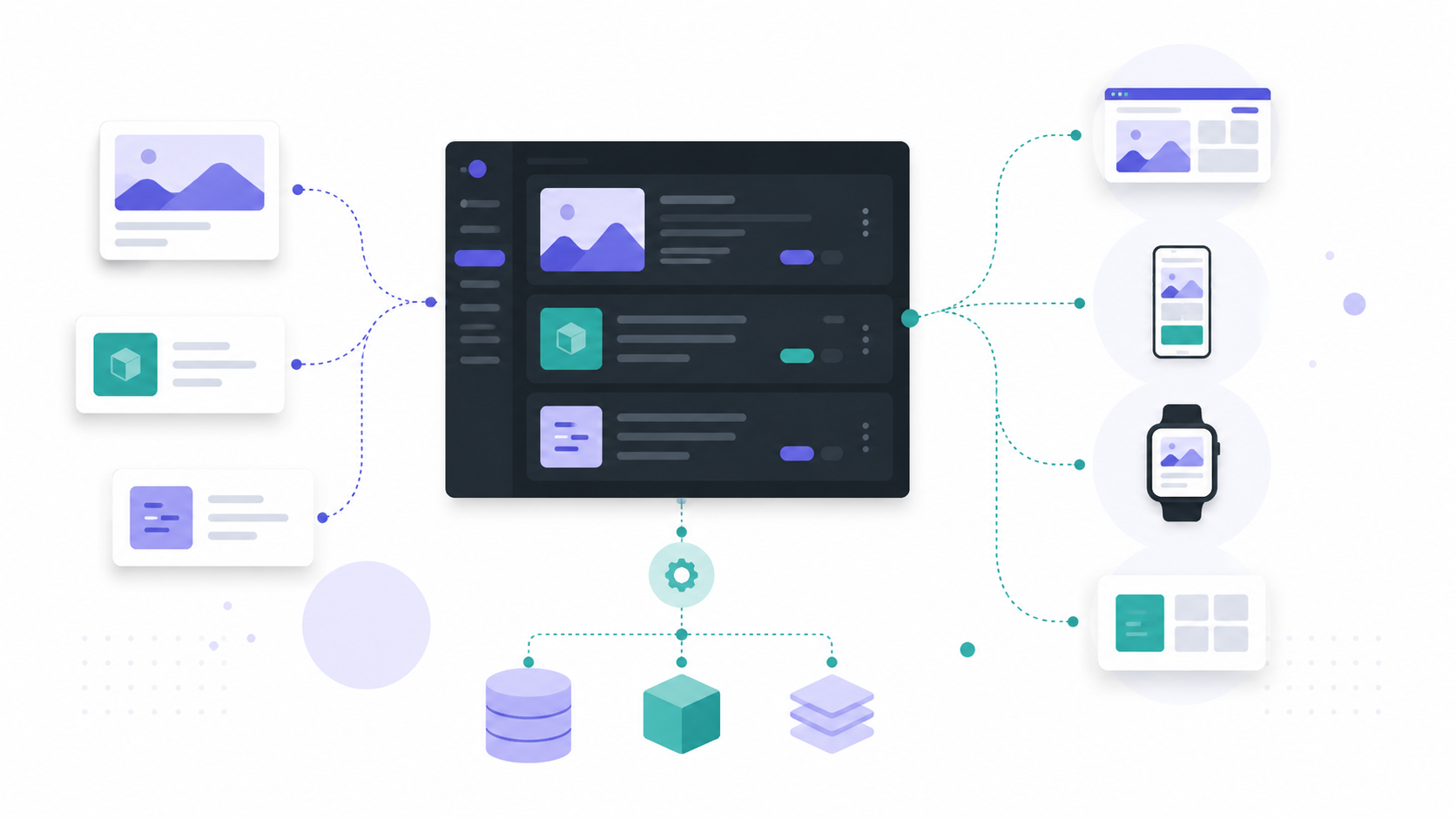
Digital experiences rarely operate in isolation. A CMS may need to exchange information with ecommerce platforms, customer relationship management tools, search services, analytics systems, marketing automation software, payment providers, or inventory databases.
API integrations are essential to a connected content ecosystem. Sanity development services can link the CMS with ecommerce platforms, CRM systems, analytics tools, search solutions, and marketing automation software. Carefully planned connections keep data moving accurately between systems, reduce repetitive manual entry, and help teams maintain efficient digital workflows.
Common integration goals include:
- Synchronizing product and service data
- Connecting customer account experiences
- Improving on-site search
- Automating campaign content
- Displaying live availability information
- Supporting transactional experiences
- Creating unified reporting processes
Integration planning should account for data ownership, authentication, error handling, rate limits, and future maintenance.
Strengthening SEO and Discoverability
When modelled correctly, a flexible content platform can support strong technical and on-page SEO. Sanity CMS development also makes it easier to build SEO capabilities directly into the content workflow. Editors can manage page titles, meta descriptions, canonical URLs, image alt text, structured content, internal links, and social sharing information through clearly defined fields.
Developers can also create reusable components for common SEO elements, reducing inconsistencies and making optimization more efficient for content teams. For AI search and answer-focused discovery, structured content is equally valuable because clear headings, concise explanations, descriptive entities, author information, and well-organized FAQs help search systems understand a website’s subject matter. SEO performance still depends on content quality, technical health, search intent, and trustworthy information, so a CMS should support a broader strategy rather than replace editorial expertise.
Security, Governance, and Reliability
Businesses need dependable systems for managing important digital information. Sanity provides cloud-based infrastructure, permission controls, encrypted data transfer, and options for backups and data management. However, security also depends on implementation decisions.
A responsible development process should include:
- Role-based access permissions
- Strong authentication practices
- Secure API configuration
- Environment separation
- Regular dependency updates
- Backup and recovery procedures
- Monitoring and performance reviews
- Testing before major releases
Governance is also important. Clear ownership, publishing rules, naming conventions, and documentation help prevent content errors as teams and platforms grow.
A Practical Sanity CMS Development Process
Discovery and Planning
The project begins by identifying business goals, audiences, channels, content types, integrations, and operational challenges. This stage helps determine whether Sanity is suitable and what the platform must accomplish.
Content Modelling
Developers then create a structured content model. The model should be flexible enough for future growth while remaining simple for editors to use.
Studio and Front-End Development
Sanity Studio can be configured around editorial needs, while the front end is developed to support brand, usability, accessibility, and performance objectives.
Testing and Launch
Before launch, teams should test content workflows, responsive layouts, API connections, accessibility, security, search functionality, and performance across relevant devices.
Continuous Improvement
After launch, analytics and user feedback can reveal opportunities for refinement. Regular maintenance keeps integrations stable and allows the experience to evolve with changing goals.
Frequently Asked Questions
Is Sanity suitable for a growing business?
Yes. Sanity can support a small website and expand to include multiple channels, content types, teams, and integrations. Its structured approach helps businesses avoid rebuilding the content foundation every time requirements change.
What is the difference between Sanity and a traditional CMS?
A traditional CMS commonly combines content management and front-end presentation in one system. Sanity separates these functions, allowing developers to create custom front-end experiences while editors manage structured content centrally.
Can Sanity support ecommerce websites?
Yes. Sanity can manage product content, merchandising information, editorial experiences, and related data while connecting with ecommerce platforms and payment systems. The exact setup depends on the store’s technology stack and operational requirements.
Is Sanity difficult for non-technical editors?
Sanity Studio can be customized to make editing more intuitive. Clear field labels, validation, previews, references, and guided workflows can help non-technical teams create and update content confidently.
Can Sanity improve website speed?
It can contribute to better performance when combined with efficient web design & development, image optimization, caching, and suitable hosting. Results depend on the complete technical implementation rather than the CMS alone.
Does Sanity support multiple languages?
Sanity can be configured for multilingual content using structured fields, language variants, and localization workflows. Development teams should plan translation relationships and publishing procedures before content production begins.
How should a business choose Sanity development services?
Look for experience in content modelling, front-end frameworks, API integrations, accessibility, performance, testing, and post-launch support. A capable partner should explain technical decisions in relation to business and user goals.
Conclusion
Sanity CMS development helps businesses build digital experiences that are flexible, scalable, and easier to manage. Its headless architecture supports multi-channel publishing, custom interfaces, collaborative workflows, structured SEO, and integrations with essential business systems.
The strongest results come from combining Sanity’s technical capabilities with thoughtful content modelling, clear governance, user-centred design, and ongoing optimization. Nerder provides specialist guidance for planning and developing Sanity-based digital platforms, from data models and Studio customization to integrations and long-term support.
Explore tailored Sanity development services and view Nerder’s location on Google Maps when choosing a trusted Sanity CMS development partner.